Sentenced to a year in juvenile detention, Miguel is ordered by the judge to keep a journal. At a group home, he meets unpredictably dangerous Mong and his mentally-challenged roommate Rondell, who possesses a surprising talent. When Mong decides to escape, Miguel plots and steals $750 from the home's petty-cash box. Rondell also decides to leave the home along with them.Their misadventures take them along the California coast to unexpected destinations, events, and revelations of self-discovery. Secrets are kept and revealed; funny, shocking, and tragic, in a book which will appeal to many teens. A 2010 ALA-YALSA Best Book for Young Adults, a 2010 ALA-YALSA Quick Picks for Reluctant Readers.
This was started by a class as part of a Grant for Innovative Teaching project; replaced by the participating teacher because of the language the characters use. However, much of the class looked captivated, and it was requested many times by class members for check out.
Friday, July 22, 2011
What I Will Do to Advocate for My Library This Year
Week 2 Assignment is to create a Voki describing personalized plans for advocating for your library. I hope students like using it.
http://www.voki.com/pickup.php?scid=4162961&height=400&width=300
Monday, July 18, 2011
Seven Things - Web 2.0 What does it mean to advocate for your library?
We've been asked to blog about what advocating for our school library means. After reading a few articles, my answer would have to be to develop awareness of the great services school librarians provide, or, can, should, will, must provide to students, faculty, staff, and community members at our schools. We need to become more vocal at the local, state and federal level, before we are leveled!
According to an article by the School Library Journal staff, some of the common questions heard are: "Why do school libraries need money for books when everything is online? Why do we need a library when students can do their research online? Why do we need librarians if all they do all day is check out books?" Karl Harvey, an elementary school librarian in Indiana, believes in involving the entire school, including parents and central office, through e-mails, web page, blog, Facebook page, and newsletter to inform and connect everything to his program, whether it's an author visit or a special schoolwide event. He collaborates with his teaching colleagues, using web 2.0 tools for professional development lessons. He emphasizes developing a good relationship with his administrator, who can "determine the library's success or failure."
Connie Williams, a high school librarian from California adds, "...everyone needs to see and participate in what you do," from the book carts you supply to classrooms to the vast resources you provide, "The invisibility factor for libraries is high," she warns. "So you need to remind people that you are here. It needs to be continual because they will forget you." The article adds, "...Williams likes to send what she calls a "Wow Letter" to her teaching colleagues, which includes all the wonderful instruction and resources her library provides, including tips on cyber safety. "They'll come up to me and say, 'Wow, I didn't know you did that.'"
Williams also stresses it's important to, "...make your presence known. That means sitting on committees, attending district and county office meetings, and showing up for school board and PTA gatherings. When you do, never go empty handed; show them how you make a difference...Be active participants."
Emily Ford's article defined advocacy as follows:“'Public support for a course of action or way of doing things.' (Longman Dictionary)." Following this defintion, she states, "Library advocacy is therefore interpreted and practiced in a variety of ways. Numerous initiatives in the library would use the word advocacy to describe what they are doing and trying to accomplish. At our recently convened ALA Annual Conference, I saw a poster session by Emerging Leader groups that focused on teen services advocacy with local communities and Libraries Build Communities. Another example includes ALA President Molly Raphael’s advocacy initiative focused on empowering communities, and the list goes on. Legislative advocacy demonstrates our library/librarian values to lawmakers. This kind of advocacy usually includes communicating with elected officials via phone calls, in person visits, e-mails, and online action forms."
A useful PDF file, "Speaking Up for Library Services for Teens: A Guide for Advocacy," can help you determine what course to take. Staistics for school libraries are shown on pp. 26-27, "Advocacy Resouces," on pp. 29-33, and an "Action Plan," on pp. 20-25. Find it at: http://www.ala.org/ala/mgrps/divs/yalsa/advocacy_final.pdf. The YALSA wiki "Advocating for Teen Services in Libraries," also useful, can be found at: http://wikis.ala.org/yalsa/index.php/Advocating_for_Teen_Services_in_Libraries
None of this information should be new to us. We should all be aware of the things that need to be done, not only at this time, but all the time. Your choices are only limited by your creativity and desire. Some pretty great things have been accomplished by DISD librarians. Post and tell everyone the great ideas you have done so far.
Sources: http://www.schoollibraryjournal.com/slj/home/890038-312/webcast_advocating_for_your_library.html.csp
http://www.ala.org/ala/mgrps/divs/yalsa/advocacy_final.pdf
http://wikis.ala.org/yalsa/index.php/Advocating_for_Teen_Services_in_Libraries
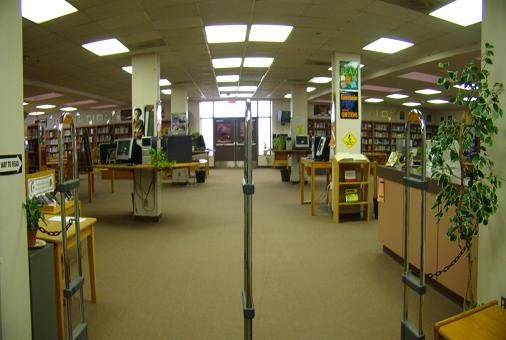
According to an article by the School Library Journal staff, some of the common questions heard are: "Why do school libraries need money for books when everything is online? Why do we need a library when students can do their research online? Why do we need librarians if all they do all day is check out books?" Karl Harvey, an elementary school librarian in Indiana, believes in involving the entire school, including parents and central office, through e-mails, web page, blog, Facebook page, and newsletter to inform and connect everything to his program, whether it's an author visit or a special schoolwide event. He collaborates with his teaching colleagues, using web 2.0 tools for professional development lessons. He emphasizes developing a good relationship with his administrator, who can "determine the library's success or failure."
Connie Williams, a high school librarian from California adds, "...everyone needs to see and participate in what you do," from the book carts you supply to classrooms to the vast resources you provide, "The invisibility factor for libraries is high," she warns. "So you need to remind people that you are here. It needs to be continual because they will forget you." The article adds, "...Williams likes to send what she calls a "Wow Letter" to her teaching colleagues, which includes all the wonderful instruction and resources her library provides, including tips on cyber safety. "They'll come up to me and say, 'Wow, I didn't know you did that.'"
Williams also stresses it's important to, "...make your presence known. That means sitting on committees, attending district and county office meetings, and showing up for school board and PTA gatherings. When you do, never go empty handed; show them how you make a difference...Be active participants."
Emily Ford's article defined advocacy as follows:“'Public support for a course of action or way of doing things.' (Longman Dictionary)." Following this defintion, she states, "Library advocacy is therefore interpreted and practiced in a variety of ways. Numerous initiatives in the library would use the word advocacy to describe what they are doing and trying to accomplish. At our recently convened ALA Annual Conference, I saw a poster session by Emerging Leader groups that focused on teen services advocacy with local communities and Libraries Build Communities. Another example includes ALA President Molly Raphael’s advocacy initiative focused on empowering communities, and the list goes on. Legislative advocacy demonstrates our library/librarian values to lawmakers. This kind of advocacy usually includes communicating with elected officials via phone calls, in person visits, e-mails, and online action forms."
A useful PDF file, "Speaking Up for Library Services for Teens: A Guide for Advocacy," can help you determine what course to take. Staistics for school libraries are shown on pp. 26-27, "Advocacy Resouces," on pp. 29-33, and an "Action Plan," on pp. 20-25. Find it at: http://www.ala.org/ala/mgrps/divs/yalsa/advocacy_final.pdf. The YALSA wiki "Advocating for Teen Services in Libraries," also useful, can be found at: http://wikis.ala.org/yalsa/index.php/Advocating_for_Teen_Services_in_Libraries
None of this information should be new to us. We should all be aware of the things that need to be done, not only at this time, but all the time. Your choices are only limited by your creativity and desire. Some pretty great things have been accomplished by DISD librarians. Post and tell everyone the great ideas you have done so far.
Sources: http://www.schoollibraryjournal.com/slj/home/890038-312/webcast_advocating_for_your_library.html.csp
http://www.ala.org/ala/mgrps/divs/yalsa/advocacy_final.pdf
http://wikis.ala.org/yalsa/index.php/Advocating_for_Teen_Services_in_Libraries
Sunday, July 10, 2011
Seven Things - Web 2.0
Here is my first entry for Seven Things - Web 2.0. This class can be taken as part of staff development requirements. When enrolled in the fall, there just didn't seem to be enough hours in the school calendar weekend to do it and also my part-time job as a working violinist, so it was dropped.
I do have a question for everyone, though: has anyone in this class monetized their blog, and has it been beneficial?
I tried to have red background and a blue text but it only came out as red lines. So this is red text with a blue background. Also the first paragraph is Georgia, the second is Verdana and the third is Trebuche. The first paragraph is Normal text size, the second large, and the third largest.
I get so caught up during the year it's really difficult to tear myself away from school daily; I was starting to leave later and later. After school is also the only time I can get things done without being interrupted dozens of times. Which I do not mind at all and for which I am grateful, because I have a job. However,it also takes days to do something that used to take hours with a second librarian at Kimball HS. As a book rep told me, there are schools in California that do the same job without a second librarian or a media assistant with triple the enrollment!
So hopefully, I'll have some more time to do what is required as well as play around more with the Web 2.0 Tools since I've had time to look at them more.I do have a question for everyone, though: has anyone in this class monetized their blog, and has it been beneficial?
I tried to have red background and a blue text but it only came out as red lines. So this is red text with a blue background. Also the first paragraph is Georgia, the second is Verdana and the third is Trebuche. The first paragraph is Normal text size, the second large, and the third largest.
| This is my Avatar |
| This is how I looked when I first got to DISD (Five years ago) |
Tuesday, July 5, 2011
7 Things Online Class
Wow! What a busy year, so busy I haven't had time to add to the blog. Creating a school newspaper from scratch is not easy, I found out, but managed to teach myself InDesign and publish fall, winter and spring issues. I administered a Innovative Teaching Grant from Junior League this past year, and I may be adding some video or photos about that. I also taught Kimball's STEM Summer Camp which was held the first two weeks following the end of school. For the summer camp, I taught students Web 2.0 Tools which may be useful (and fun) to use for school, including Glogster, Blabberize, Study Blue, Evernote, and Museum Box, as well as some speed reading strategies, and reading part of a book my principal intern got at the Reading Conference in San Francisco last April. The STEM camp teachers were also part of a committee which will present at staff development this August on the book the district has chosen for study, "Teaching With Poverty in Mind," so each teacher was assigned a chapter to create PowerPoint slides on the key points. I think I created 16 slides.
I'm hoping to practice more on the Web 2.0 Tools which were presented at the TCEA conferences the two years I got to go (2011 and 2007) as well as the 21st Century Teacher Conferences for the past two years.
I'm also sorry to report there hasn't been a second librarian at Kimball since Linda York retired in October 2009. We had subs the rest of that school year, but administration did not fill the position with a librarian.This past year has been very busy without Linda's help. It was also a blow to hear of her passing this April. I've missed her kindness and support.
I'm hoping to practice more on the Web 2.0 Tools which were presented at the TCEA conferences the two years I got to go (2011 and 2007) as well as the 21st Century Teacher Conferences for the past two years.
I'm also sorry to report there hasn't been a second librarian at Kimball since Linda York retired in October 2009. We had subs the rest of that school year, but administration did not fill the position with a librarian.This past year has been very busy without Linda's help. It was also a blow to hear of her passing this April. I've missed her kindness and support.
Subscribe to:
Comments (Atom)
